
The Future of Music Production: Trends and Predictions
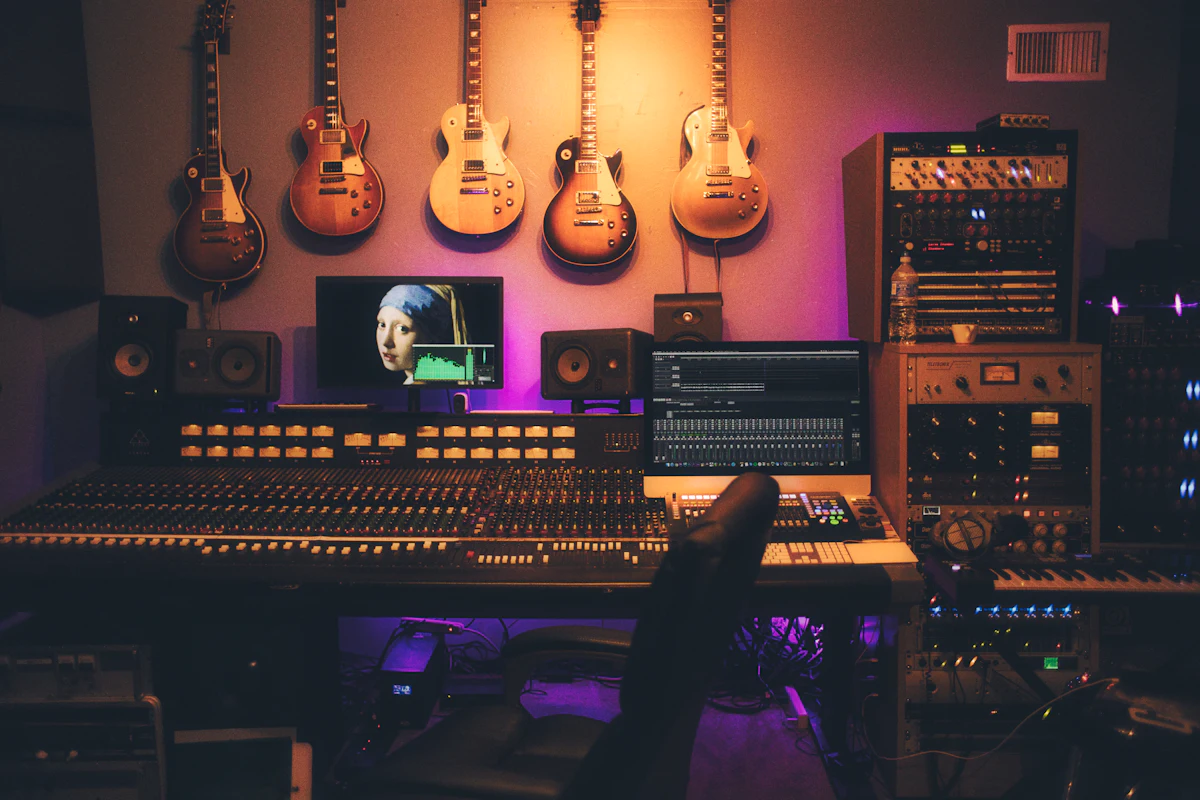
Six trends reshaping how music is made: from cloud DAWs and generative tools to AI, spatial audio, and the rise of the independent artist.
AI tools have matured fast. But the bigger shift may be in who gets to make music — not just how it gets made.
Music production has never changed faster. In the space of a few years we’ve gone from hardware-bound studios to fully browser-based DAWs, from manually programming every note to AI systems that generate complete arrangements from a text prompt. Some of these changes are incremental; others are structural. Here are the six trends we think matter most.
1. Cloud-Based Music Production
Cloud-based production has crossed from novelty to mainstream. Tools like Soundtrap, BandLab, and browser-based environments let producers work across devices without installing software or managing project files manually. Collaboration that once required sending session files back and forth now happens in real time, in the same interface.
MIDI Maker is built entirely in the browser for exactly this reason. There’s no download, no setup — you open a tab and start making music. As internet connections improve and browser audio APIs mature, the gap between cloud tools and traditional desktop DAWs will continue to narrow.
2. Artificial Intelligence and Machine Learning
AI’s role in music has accelerated dramatically. In 2023, tools like Udio and Suno moved from research demos to widely-used products. Stems can now be separated from mixed audio with near-perfect accuracy. AI mastering services have become good enough that many independent artists use them as a final step.
The interesting question isn’t whether AI will be used in music production — it already is — but where human judgement remains irreplaceable. Curation, emotional intent, and the specific choices that make a track feel like it came from a particular person: those still require a producer behind them.

3. Virtual Reality and Spatial Audio
VR and spatial audio have taken different paths. Spatial audio — Dolby Atmos mixes, binaural processing, Apple Music’s spatial tracks — has moved into the mainstream faster than full VR environments. Streaming platforms now actively push spatial versions of albums, and mixing in 3D space is becoming a standard skill for engineers.
Immersive VR production environments are still early, but they offer something genuinely new: the ability to experience a mix as a physical space, moving through the soundstage rather than just listening to it on speakers. As headsets become lighter and more affordable, expect this to develop into a real production workflow.
4. Generative Music Techniques
Generative music has benefited more from improved hardware than from any single algorithmic breakthrough. Phones now run real-time synthesis that would have required a dedicated server a decade ago. This means generative systems can be more complex, more responsive, and more musically sophisticated than before.
The practical effect: rather than spending hours inputting notes into a DAW, producers can define the parameters of what they want — key, scale, rhythm feel, chord density — and let the system explore the space. MIDI Maker is built around this idea. The producer stays in control of the musical intent; the algorithm handles the note-by-note variation.
5. Streaming Data Shapes Production Decisions
Streaming services don’t just distribute music — they generate data about it. Skip rates, save rates, playlist adds, listener demographics: all of this feeds back into decisions about what to make next. Some producers use this data explicitly; others absorb it through the market signals it creates.
The tension here is real. Following the data produces music optimised for the algorithm, which can mean shorter intros, more consistent energy curves, and less structural risk. The most interesting producers will be those who understand these pressures clearly enough to consciously push against them when it matters.
6. The Rise of Independent Production
The barrier to making professional-sounding music has never been lower. A laptop, a decent audio interface, and a few well-chosen plugins are enough to produce something release-ready. Direct-to-fan platforms, sync licensing marketplaces, and playlist pitching tools mean independent artists can build sustainable careers without label support.
This democratisation has a flip side: more music being made means more competition for attention. The producers who thrive will be the ones who combine craft with a clear point of view — music that sounds like it could only have come from them.
The tools are getting better every year. The question, as always, is what you do with them.